
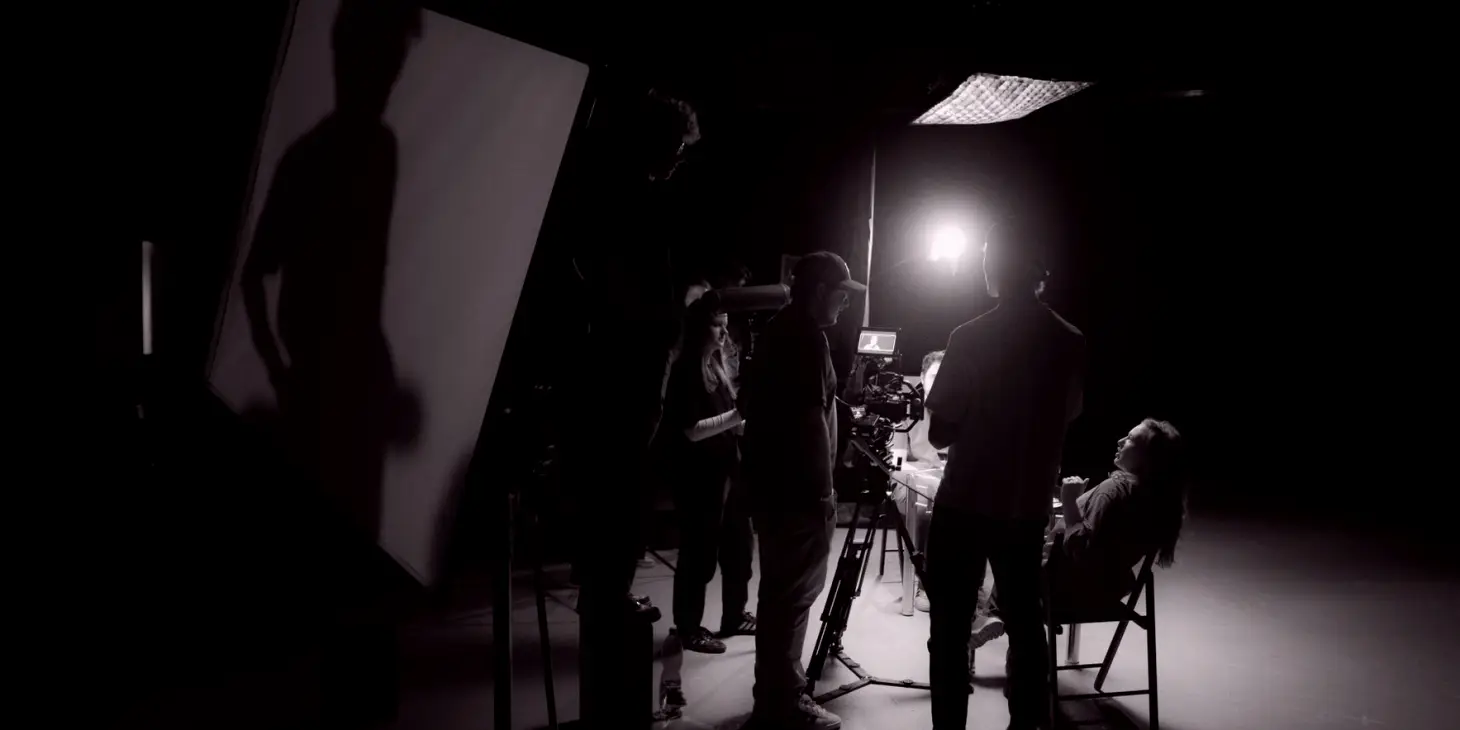
How a regional news team stopped losing its cues: Gareth's case
A short account of how a written workflow review helped one regional news team tighten its running order, cueing and fallback steps, told with the producer's first name only.
The call from a regional news producer
Gareth runs the evening bulletin for a small regional news team, and he rang us in the middle of the autumn schedule with a problem he could describe but not quite pin down. Twice in a month the programme had overrun by a few seconds and the closing item had been cut abruptly. Nobody had made an obvious mistake, and the studio equipment had worked as it should.
I took the call as part of our workflow review service, which is a written look at how a live broadcast is actually run rather than how it is meant to be run. Before agreeing to anything I asked Gareth for the latest running order, the cue sheet his director used, and any notes about what had gone wrong. He sent them the same afternoon, along with a frank note that the team felt they were firefighting every night.
What we asked to see first
A review begins with paper, not with a visit. I asked for three things: the running order as it stood on air, the version the gallery worked from, and any informal notes pinned near the desks. The aim was to find where the team's shared picture of the programme differed from one person to the next, because that gap is usually where live problems begin.
Gareth's team had a good running order, but it existed in two versions. The presenters had one with timings rounded to the nearest minute, while the director held another with cues marked to the second. Neither was wrong, yet small differences in how each handled a late item added up across the half hour. We also asked who was allowed to change the running order once the programme had started, and the answer turned out to be everyone and no one.
- The running order as printed for the presenters
- The gallery's cue sheet with timings
- Any notes kept at the desks or on monitors
- A list of what had gone wrong in recent weeks
Spending an evening in the gallery
After reading the documents I visited the studio on a live evening and sat at the back of the gallery with a headset set to listen only. I said nothing during the bulletin and wrote down every spoken instruction, noting who gave it and who acted on it. Watching a real programme tells you things that no document can, such as how the room sounds when a story collapses two minutes before air.
What stood out was how much the director carried in her head. Fallback decisions were made well, but they were made out loud and from memory, which meant a new colleague on a different night would have no way of knowing them. The team was competent. What it lacked was a written record of the choices it already made instinctively, so that the next person could follow the same logic.
What the written review recommended
The review ran to a handful of pages and was written in plain sentences, not in a template. Its first recommendation was a single running order, owned by one named person, with a clear rule for when it could be changed. The second was a cue sheet that showed back-timed targets for each segment, so the director could see at a glance whether the programme was ahead or behind.
The third section covered fallbacks. We wrote down what happens if a guest link drops, if a package fails to play, or if a presenter loses their prompter. Each case was given a first action and a named person responsible for it. None of this was new to the team. It simply had never been set down in one place, and Gareth said afterwards that reading it felt like seeing the evening's decisions finally laid out on a table.
- One running order with a named owner
- Back-timed targets for every segment
- Written fallbacks for the most likely failures
- A short briefing note for new crew members
What changed in the weeks that followed
Gareth did not adopt every suggestion at once, and we would not have wanted him to. He started with the single running order and the back-timed cue sheet, then added the fallback page after a fortnight. Overruns did not vanish, but the closing item stopped being the thing that got sacrificed, because the director could now see the drift early and trim a middle segment instead.
He also told me the nightly handover had become quieter. Where the team once spent the last ten minutes before air resolving small disagreements about timings, they now spent it on the stories. I am careful not to claim more than that. A review does not guarantee a flawless bulletin, and live television will always find new ways to surprise a crew. It simply gives people a shared reference to return to.
What I took from the case
Cases like Gareth's remind me that dependable broadcasting is rarely about better equipment. It is about whether the people in the room agree on what is supposed to happen and what to do when it does not. A review is a way of writing that agreement down while the pressure is off, so that it can be used when the pressure is on.
If your own programme feels as though it survives on a few experienced people's memory, a workflow review is a sensible place to start. We read your documents, watch a live session, and give you a written account of what we saw and what we would change, in an order you can act on at your own pace.
Gareth's team did not need new kit or a new format, only a clear and shared record of how their bulletin runs and what happens when it slips. That is what a workflow review aims to provide: a short written document, grounded in what we saw in your gallery, that you can hand to any colleague. If that sounds useful, the contact page is the place to begin.
Priya Nair
Acoustics and Audio SpecialistPriya measures and treats studio spaces so dialogue is intelligible on air and in the control room.
Send us a message
- Phone
- 01305 842160
- By email
- [email protected]