
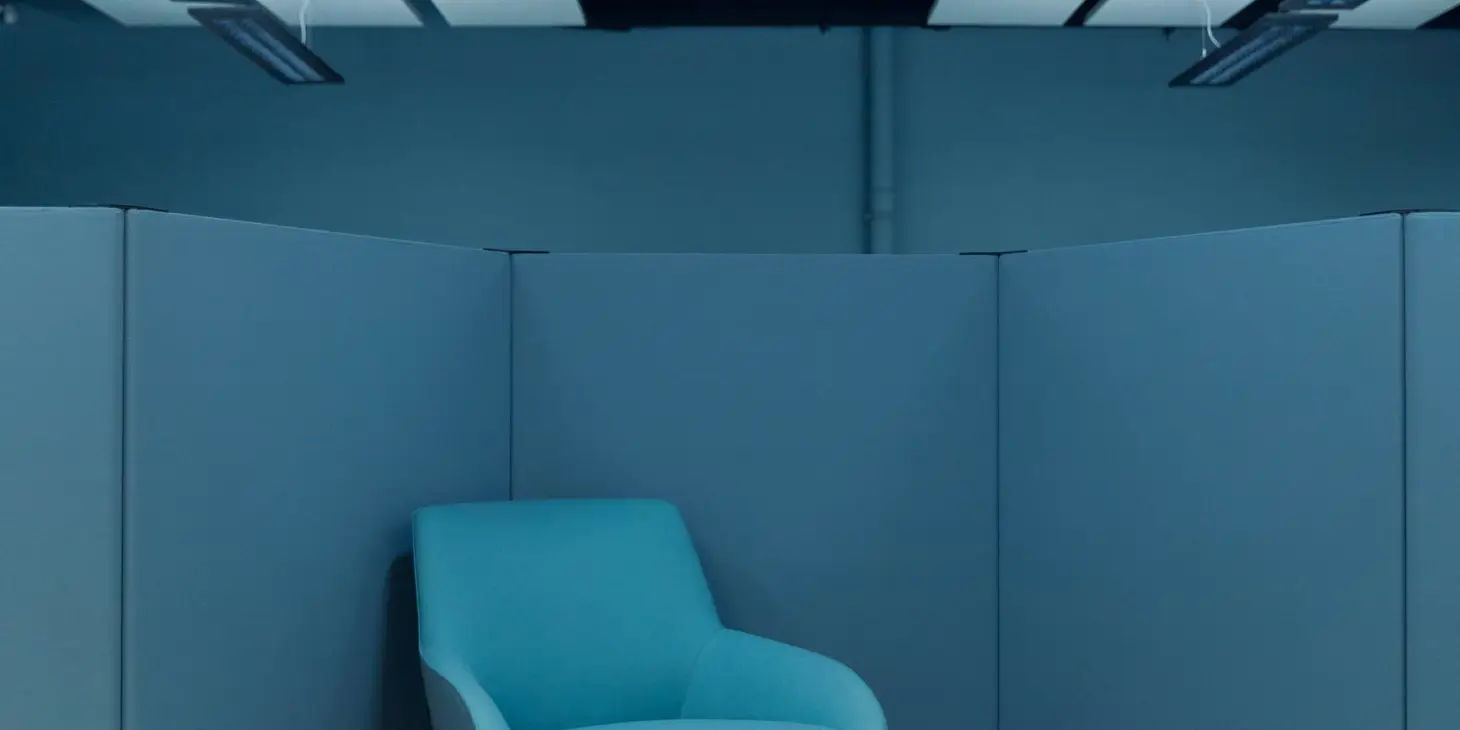
A Quiet Interview Room for a Busy Regional Newsroom
Tom tells the story of Marcus, a news editor whose small interview studio sounded fine to the eye and poor on air, and how measurement and modest treatment brought the voices back.
The call from Marcus
Marcus runs the output desk for a small regional news operation, and he rang us in the first weeks of autumn with a complaint that is more common than people admit. His interview room looked right on the monitor, with a pleasant backdrop and two comfortable chairs, yet guests sounded distant and slightly hollow, as if they were speaking from the bottom of a stairwell.
He had already tried the obvious fixes. Two different lavalier microphones, a change of mixer settings, and a rug borrowed from a colleague's flat. None of it had moved the problem far enough to matter. His editors were spending evenings cleaning up dialogue that should have been usable straight from the recording.
I am the lighting and camera lead here, so I did not carry out the measurements myself. I sat in on the visit alongside Priya, our acoustics specialist, and I want to describe it as someone who watched the method from the side, because the order of the work is what made the difference.
Measuring before touching anything
Priya asked Marcus not to change a single thing in the room before she arrived. She wanted the space as his guests experienced it, including the humming extractor above the door and the glass partition he was rather fond of.
She spent the first hour taking measurements. She clapped, played test tones through a small speaker and recorded how long each sound lingered in the room. The numbers confirmed what Marcus had heard: a long, uneven decay in the low and middle frequencies, with the bare plasterboard walls and the glass doing most of the damage.
What struck me was how little she guessed. Marcus had assumed the microphones were at fault. The room was returning every word to the microphone a fraction late, and no change of kit would have fixed that.
- Reverberation time measured at several points in the room
- Background noise recorded with the extractor on and off
- Seating and microphone positions noted exactly as used on air
What the room was actually doing
The written report that followed was plain and short. It explained that the two facing walls were producing flutter between them, so a sharp consonant bounced back and forth several times before dying away. The glass partition behind the host's chair added a bright, harsh reflection straight into the microphone.
Beneath that sat a quieter problem. The extractor produced a steady low rumble that the ear learns to ignore in the room but the microphone never does. On a recording it sat under every sentence and made the dialogue tiring to listen to for more than a few minutes.
Priya set out the findings in order of effect, not in order of cost, so Marcus could see which items would give him most of the improvement and which were tidying. He told us later that having the problems ranked made it far easier to agree a budget with his own managers.
Treatment in proportion to the room
The advice was modest. Absorbent panels went on one of the two facing walls and across the ceiling area above the guest chairs, leaving the other wall bare so the room did not become dead and uncomfortable. A heavy curtain was fitted over the glass, drawn during recording and open the rest of the time.
For the extractor, we suggested a simple change of switching it off during takes and ventilating between interviews, with a quieter fan to be considered later. It was the cheapest item on the list and, Marcus says, the one that surprised him most.
We did not recommend turning the room into a padded box. A studio that sounds unnaturally dry makes guests nervous and presenters sound clipped. The aim was to bring the decay down to a level where speech sounds close and clear while the room still feels like a room.
- Absorption on one wall and over the guest seating
- A heavy curtain across the glass partition
- Extractor off during recording, with a quieter unit noted for later
Listening again afterwards
Priya returned once the panels and curtain were in place and repeated the same measurements from the same positions. The decay had shortened and smoothed out, and the extractor, switched off, left a quiet floor under the voices.
The better test came when Marcus recorded an ordinary interview that afternoon. He played me a short clip over the phone, and the difference needed no explanation. The guest sounded as though she were sitting across a table, not calling in from a corridor.
His editors, he said, now use the first take more often than not. That is a modest claim, and I would rather leave it modest. The room still has limits, and a very loud guest or a badly placed microphone can still cause trouble, but the baseline is sound, and the work from here is ordinary craft instead of rescue.
What other teams can take from it
The lesson I took from Marcus is about order. Measure first, rank the problems, treat the biggest ones in proportion, and measure again. It sounds obvious, yet most rooms we visit have already had money spent on microphones and software before anyone checked the walls.
If you are planning something similar, note the small things that make your room unusual: hard glass, a low ceiling, a noisy fan, a shared wall with a corridor. Tell us about them when you get in touch, as they usually explain more than the equipment list does.
Marcus has agreed that we can tell his story, with his first name only. He asked me to add that the curtain was the best forty minutes of his month, and I have passed that on to Priya, who was not surprised.
Marcus's room did not need new equipment or an expensive rebuild. It needed someone to measure what the walls, glass and extractor were doing, rank the problems and treat the largest ones in proportion. If your voices sound distant on air and you cannot say why, a measured visit is a sensible first step, and the written report stays with you whatever you decide next.
Tom Whitcombe
Lighting and Camera LeadTom plans lighting plots and camera positions for news and interview sets, and trains crews on the day.
Send us a message
- Phone
- 01305 842160
- By email
- [email protected]